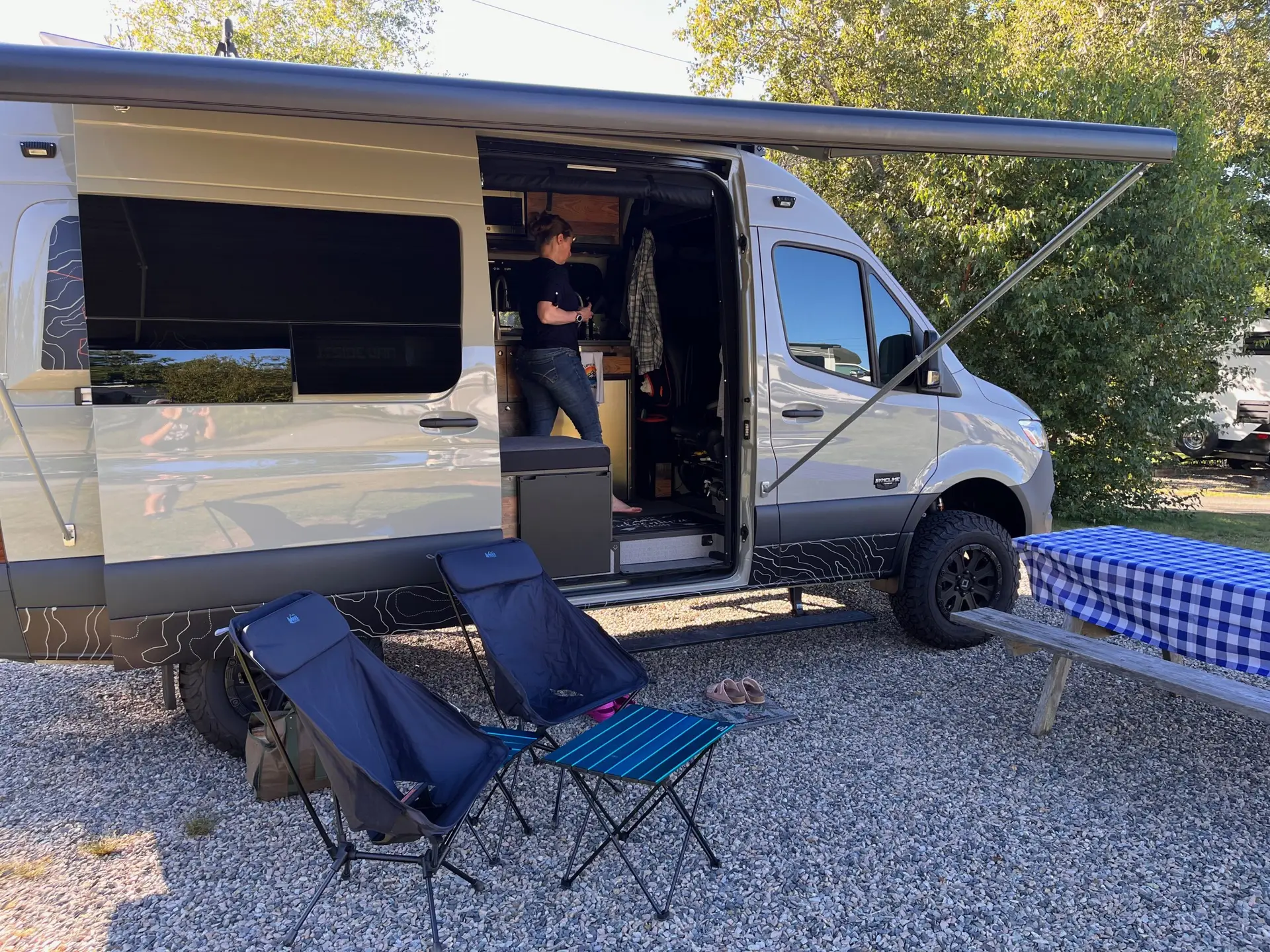
When we decided to embrace part-time van life last year, we knew we wanted something that could handle both comfortable driving and backcountry exploration. Our search led us to Outside Van’s Syncline model, built on a Mercedes-Benz Sprinter 144″ platform. After six months of ownership, we’ve learned that this mid-sized wheelbase is perfect for our style of adventure – manageable in traffic yet capable enough for the mountains and forests we love to explore.
The journey to make the Outside Van Syncline our own began immediately. While the base design was solid, we’ve added personal touches here & there and modifications that reflect our specific needs. From our custom door storage system to our headliner shelf, each change represents a lesson learned from actual time on the road.
Making the Outside Van Syncline Our Own
The Outside Van Syncline 144″ wheelbase initially seemed like it might be too compact, but it’s proved to be ideal for our needs. We can navigate tight New England roads and still find parking at our favorite breakfast spots in town. Inside, we’ve organized the space to match our travel style. The fold-away bed system gives us options – though we usually leave it set up as a permanent bed, it’s nice knowing we can reconfigure for larger gear transport when needed.
One of our favorite features is the Lagun table mount. We’ve found it perfect for everything from morning coffee to evening work sessions. Its adjustability means we can use it while sitting on the bench seats or swivel the front seats around for different configurations. Small details like this have made daily life in the van feel natural rather than cramped.
Power and Connectivity: Our Off-Grid Setup
Living and working from the van meant getting our electrical setup right from the start. The standard power system is solid, but we’ve made it even better for our needs. We can run everything from our coffee maker to laptops without worry, and adding Starlink was a game-changer for remote workdays. There’s something special about joining a video call while parked beside a mountain lake, knowing you have reliable power and internet to get the job done.
Water management was another learning curve. We quickly figured out that our morning routines and quick trail-head showers determine how long we can stay out. Through trial and error, we’ve developed habits that help us extend our water supply without feeling like we’re sacrificing comfort. Though, we are exploring some options for even longer stays off-grid.
Custom Storage Solutions: The Door Panel Project & Mounted Storage Boxes
One of our biggest modifications came from a simple observation: the standard mesh door pockets weren’t cutting it for our gear. We needed something more versatile. Using military-grade Cordura fabric, we designed and built custom door panels with a modular velcro system. We can easily swap out different pouches depending on the trip – sometimes it’s camp chairs and tables, other times it’s hiking gear or camera equipment.
We also added the Owl Van’s XL Monster Box and B2 Bike Mounts for some additional storage for things like power cables, water connections, and eventually for bikes, once we get them. This really freed up a lot of space inside the van and made it feel less cluttered.
The modification process taught us a lot. We documented the entire project on video, from removing the original panels to creating the new ones. It’s these kinds of personalized mods that have really made the van feel like our own.
Trail-Tested Performance
The Agile RIP Kit suspension has proven its worth on every forest service road we’ve tackled. The improved stability made all the difference, especially when navigating around unexpected terrain. Paired with the all-wheel drive system, we’ve yet to find terrain that makes us second-guess our route choices.
We do have some other mods planned for the suspension, primarily adding some coil-overs to stiffen up the ride and to reduce body sway that you can get in a tall van. There may be some other things we are thinking of, but we will save those for a future post, once we actually get them installed!
Technical Setup Deep Dive
The power system in out Outside Van Syncline has been rock-solid and met our needs: dual lithium batteries (13.2 kWhs) power everything from our 12V refrigerator to laptop chargers. The 3,200W inverter handles larger appliances easily, while 140W of solar keeps us topped up during extended stays, plus a port for our portable solar panel for some added boost. Key monitoring points let us check battery levels, water capacity, and temperature at a glance – something we’ve found essential for planning our days.
For climate control, we’ve learned to work with the van’s design. Opening the Maxxair fan and side windows creates excellent airflow, while insulated window coverings help maintain temperature in any weather. Our water system holds 20 gallons fresh and 22 gallons grey – through experience, we’ve found this lasts us about 4 days with careful usage.
Daily Life in the Outside Van Syncline
A typical morning in our van looks something like this: Coffee brewing on the counter while we adjust the Lagun table for breakfast prep. The natural light streaming through the windows makes the space feel larger than its dimensions suggest. We’ve found that organization is key – everything has its place, and our custom storage solutions mean we’re not constantly shuffling gear around to access daily items.
Climate control has been another pleasant surprise. Even during a Fall camping trip where temperatures dropped down pretty low, the insulation and Rixen diesel heating system kept us comfortable. In summer, the Fiamma awning creates an outdoor living room that effectively doubles our usable space and the 48v Nomadic A/C really does the trick for keeping the inside comfy when it’s steamy outside.
Future Plans and Lessons Learned
Six months into life with our van, we’re still discovering new ways to improve our setup. Next on our modification list is, beyond what was mentioned above, is the custom insulated curtains Vicky is making, and I am going to be doing something to give us even more water for extended boondocking adventures. We’ve learned that the best changes come from actual experience rather than theoretical needs. That’s why we lived with the standard door storage for a month before designing our custom solution.
Modification Tips From Our Experience
For anyone considering similar modifications:
- Start with basic organizational changes before making permanent modifications
- Document your current storage challenges for a few weeks before designing solutions
- Test material samples before committing to full modifications (our Cordura fabric choice came from hands on experience hiking in the rugged mountains near home)
- Consider modular designs that can adapt as your needs change
- Think through multiple uses for each modification – our door panel system works for various gear types
- Don’t rush permanent changes – live with temporary solutions first to validate your ideas
The Van Life Journey
What started as a way to enhance our weekend adventures has become a lifestyle we never expected to love so much. The Syncline provides more than transportation – it’s our mobile office, basecamp, and sanctuary. Through summer storms in the Acadia and cool fall nights, it’s proven itself capable and comfortable.
We’ve learned that van life isn’t about having the perfect setup from day one. It’s about creating a space that evolves with your needs and adventures. Each modification, from our custom storage to our StarLink upgrades, reflects a lesson learned on the road.
For those considering this path, remember that the best van is the one that fits your specific needs. Our journey with the Outside Van Syncline continues to evolve, and we’re excited to see where the road takes us next. Follow along as we continue to modify and improve our mobile home, always learning from each mile traveled and every night spent under the stars.
Check out a our full van tour video!