Dawn broke over Jeremy’s Bay and we performed our morning ritual of packing up Bertha, the wilderness of Kejimkujik stretched endlessly around us, we were ready for our next adventure visiting the very birthplace of European settlement in North America.
The Trail That Prepares Your Soul
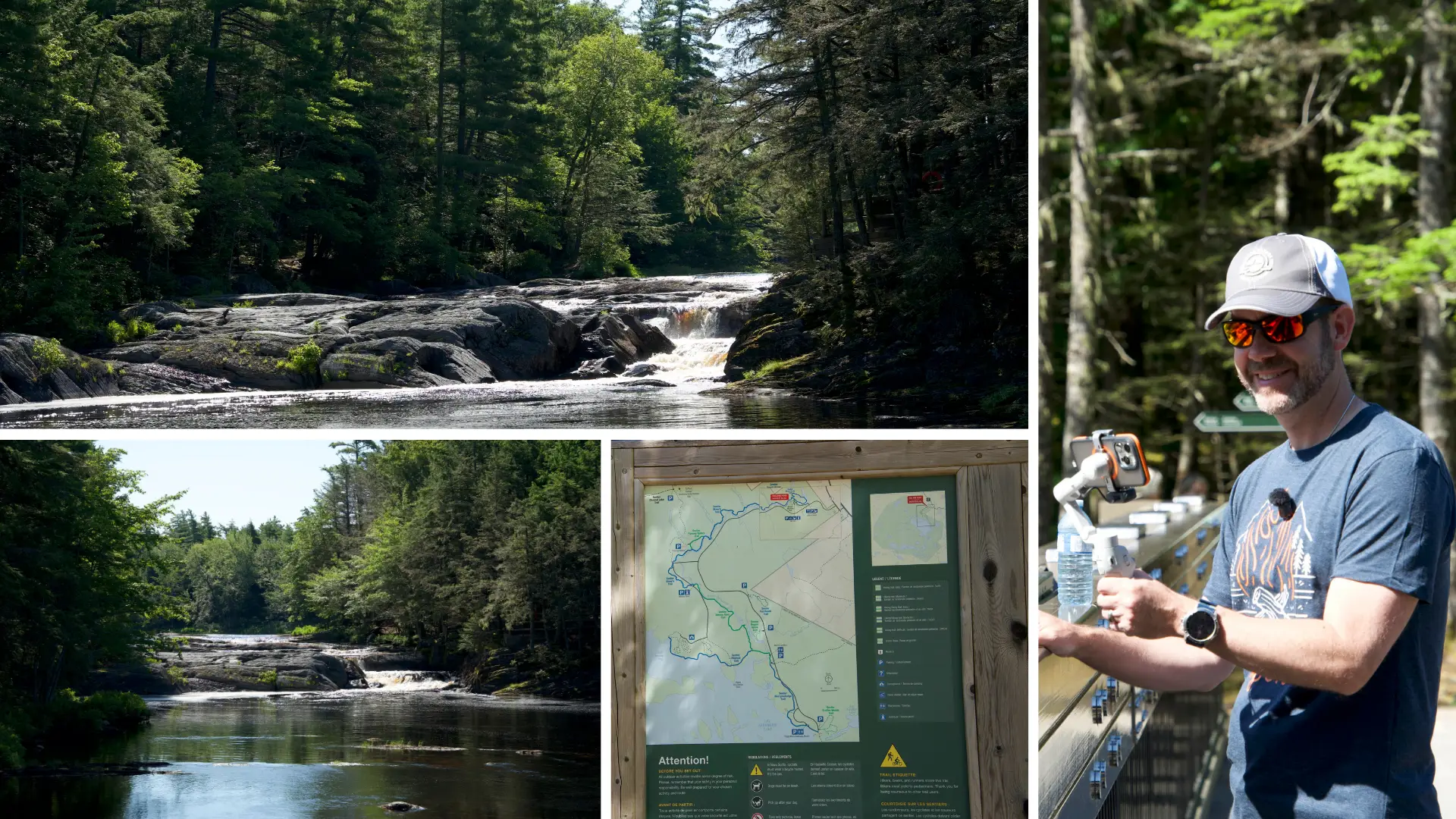
Before leaving Kejimkujik entirely, we couldn’t resist one final wilderness experience. The Mill Falls Trail beckoned from the visitor center—a gentle 2-kilometer hike out to the small pedestrian bridge overlooking Mills Falls. If you travel further down the river, you see people floating down the river on tubes or out on kayaks and canoes.
Walking back to the visitor center, we discovered one of those thoughtful touches that makes Canadian parks so special: a complete bike repair station with every tool imaginable, from tire patches to a mounting stand. This level of consideration for different types of adventurers reinforced why Kejimkujik attracts everyone from families to serious outdoor enthusiasts.
Annapolis Royal: Coffee and Contemplation
Pulling into Annapolis Royal felt like stepping through a portal into living history. We heeded the parking tip from our research, arriving early enough to snag a street parking spots that make exploration so much easier in this compact historic center.
Our first stop was a charming local coffee shop, Sissiboo Coffee Roaster, that perfectly embodied small-town Maritime hospitality. I opted for the walnut cinnamon bun and an iced latte—both earning enthusiastic thumbs up—while Pat settled for a ginger beer and chocolate chip cookie.
Sitting with our treats, looking out over the view of the Annapolis River toward Fort Anne, the weight of this place’s significance settled over us. This was where Pierre Dugua, Sieur de Mons, had returned in 1605 after the failure of the Saint Croix Island settlement, which will visit later in our Canada Maritime adventure. Making Annapolis Royal older than Plymouth, Jamestown and Quebec City settlements.
Fort Anne: Canada’s First National Historic Site
After enjoying our coffee and treats it was a short walk to the Fort Anne National Historic Site, Canada’s first National Historic Site and the oldest surviving fort in the country. Construction on the original Fort began in 1639 with additional construction running through 1799. The Fort Anne National Historic Site includes some of the original structures dating back to the 18th and 19th century, including the underground powder magazine structure dating back to 1708. As we with the Fortress of Louisburg there were continued battles between England and France over this valuable land.
Gardens That Bloom Through History
Our short walk from Fort Anne to the Annapolis Royal Historic Gardens felt like transitioning from history’s battles to its beauty. This 17-acre historic garden was established in 1981, but designed to represent gardens from various periods of Acadia’s history, offered a different kind of time travel.
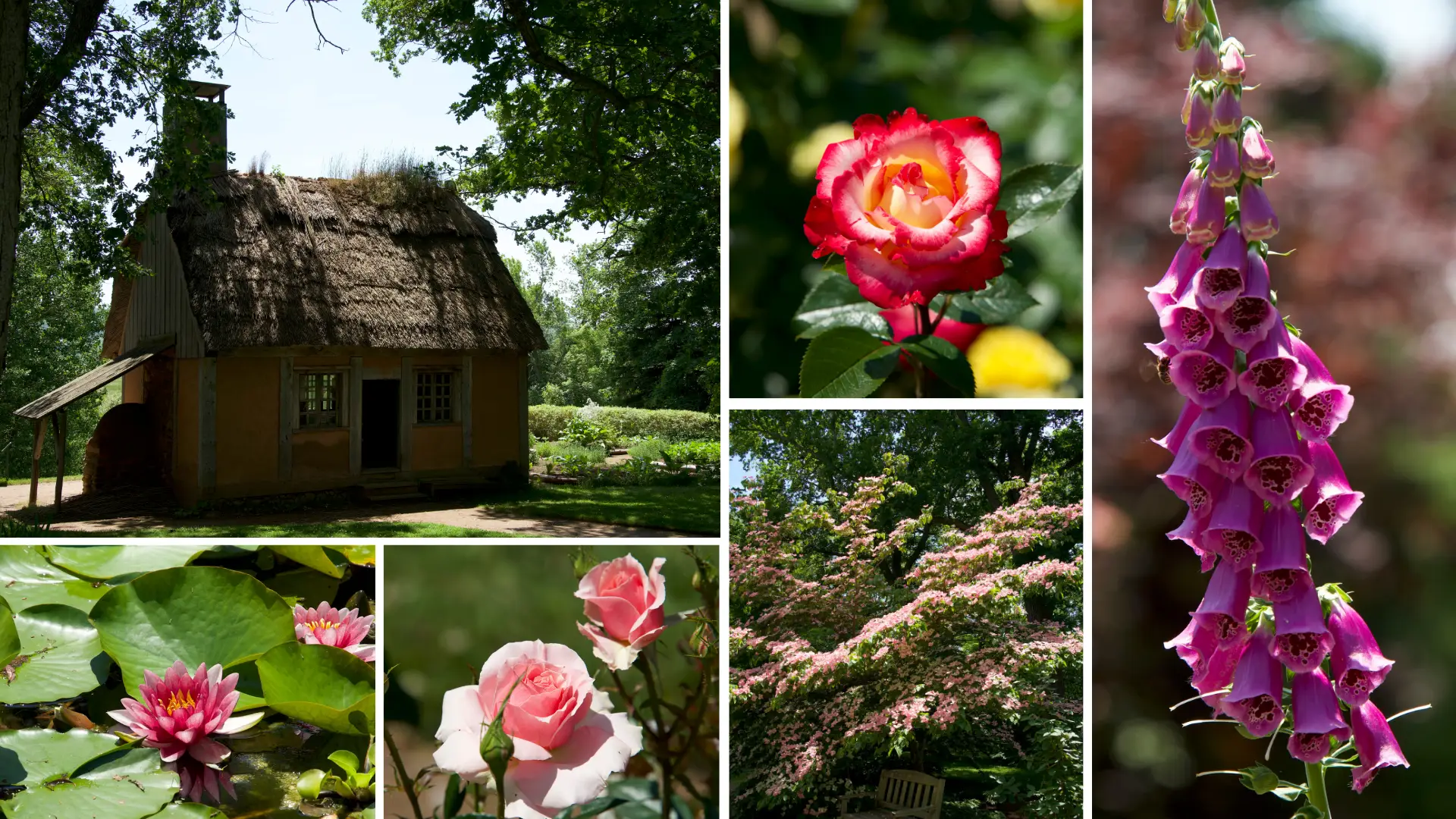
The laminated map we received at entrance promised “17 acres of paradise,” and we were eager to discover if this bold claim would hold true. Wandering through themed garden sections, we found ourselves moving through centuries of horticultural evolution. The Acadian Garden showcased the practical beauty of New France’s agricultural heritage, complete with a thatched-roof cottage that felt straight out of a fairy tale—though we had to admire it from a distance since mason bees had taken up residence in the thatch.
After cooling off with some refreshing lemonade (it was turning into quite a warm day), we continued exploring, discovering sections dedicated to bird watching—including some very cooperative ceramic specimens that posed perfectly for photos, unlike their feathered counterparts. We wrapped up out visit with the rose garden that proved irresistible for that classic travel ritual of stopping to smell the roses—literally.
Grand-Pré: Where Hearts Were Broken and Cultures Scattered
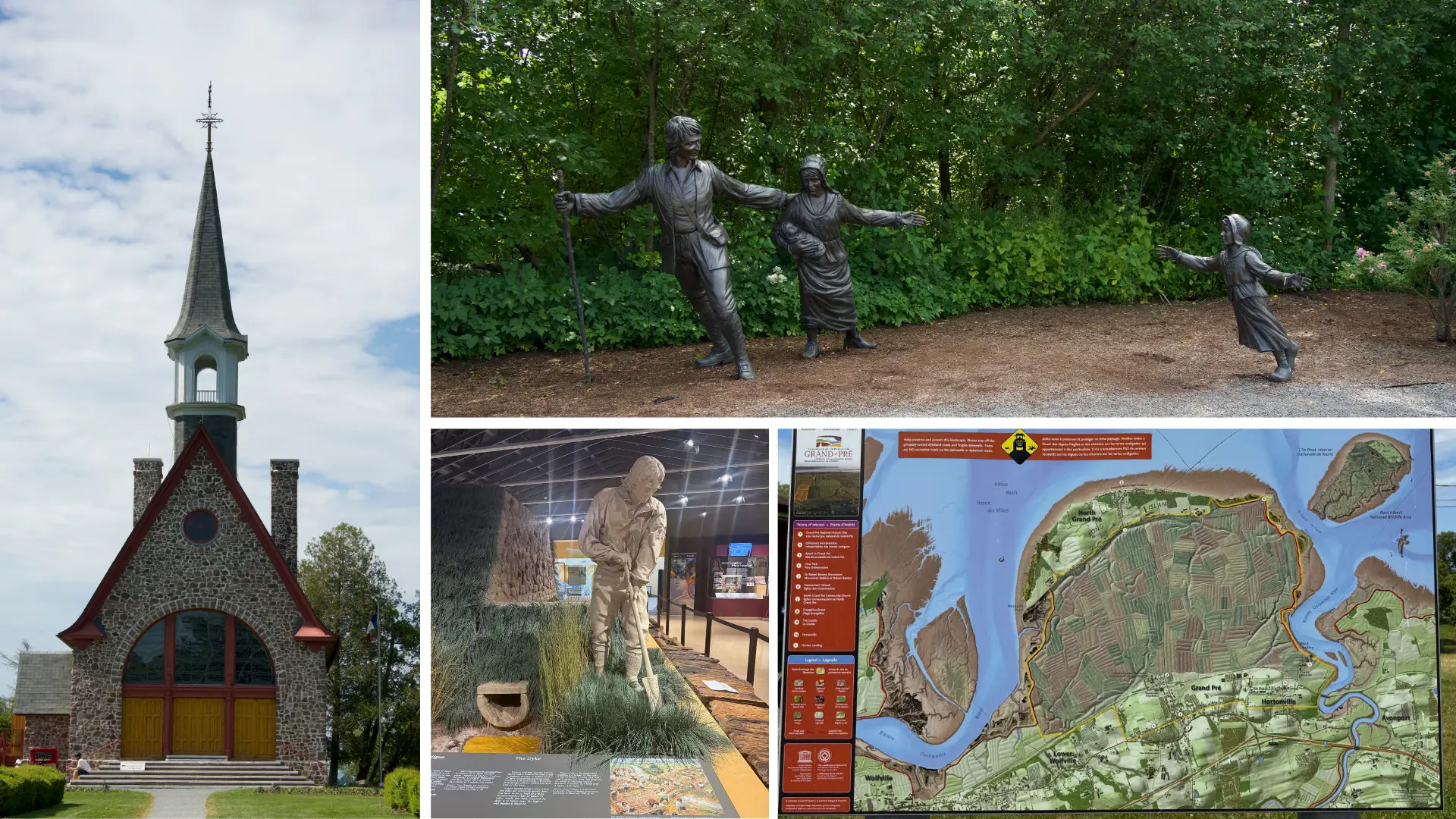
Grand-Pré National Historic Site opened our eyes to one of North America’s most tragic yet largely unknown stories. This place, which the Acadians considered their homeland, became the epicenter of a forced deportation, known as Le Grand Dérangement, that occurred between 1755 and 1762 scattering families across the globe and gave birth to cultures as far away as Louisiana.
As part of Le Grand Dérangement the Acadians were deported to various colonies including: 1,069 to Massachusetts, 1,150 to Virginia, hundreds more to other colonies. Many ships never reached their destinations. Families were deliberately separated—men loaded onto different vessels than women and children, ensuring that many would never see each other again. This explained the connection to modern Louisiana suddenly made perfect sense: “Acadian” became “Cadien,” which became “Cajun.” The vibrant culture we associate with Louisiana has its roots in these peaceful Maritime farmlands, carried there by people who lost everything but refused to lose themselves.
One of the most interesting facts we learned about the Acadians was that they weren’t just French—they were a unique culture that had emerged from French, Basque, Spanish, Portuguese, Irish, and Scottish settlers who had intermarried and created something entirely new. They considered themselves neutral in the ongoing conflicts between France and Britain, but neutrality wasn’t an option when empires were fighting for control. The Acadians had been incredibly successful farmers, creating innovative dyke systems that turned marshland into fertile agricultural land. Their very success made them a target—both the French and British wanted control of their bountiful harvests.
Smiley’s Provincial Park: The Polar Opposite Experience
After a day filled with grand historical narratives and tragic human stories, arriving at Smiley’s Provincial Park. The contrast with our previous night’s Canada Day experience couldn’t have been more dramatic. As we explored our campsite loop, we found ourselves virtually alone—just a few fellow campers around the bend, but our immediate area felt completely private. This was the polar opposite of Jeremy’s Bay’s packed loops, and we couldn’t have been more grateful for the timing.
The registration process perfectly matched the park’s character: make your reservation online, then proceed directly to your site. No crowds, no chaos, just the simple pleasure of claiming your spot in a campground where genuine privacy was the norm rather than the exception.
The extra space meant that we could open up Bertha’s back doors to test out our new Geyser sponge shower system. With no hookups but plenty of privacy, and clear skies in the forecast, we were finally in the ideal situation to see exactly how much water we could save with the Geyser sponge system.
Experience Our Annapolis Royal and the Acadian Heart Adventure
Want to experience the emotional weight of standing where North America’s story began, and witness the tragic beauty of the Acadian memorial sites? Check out our YouTube video here:
Subscribe to our YouTube Channel
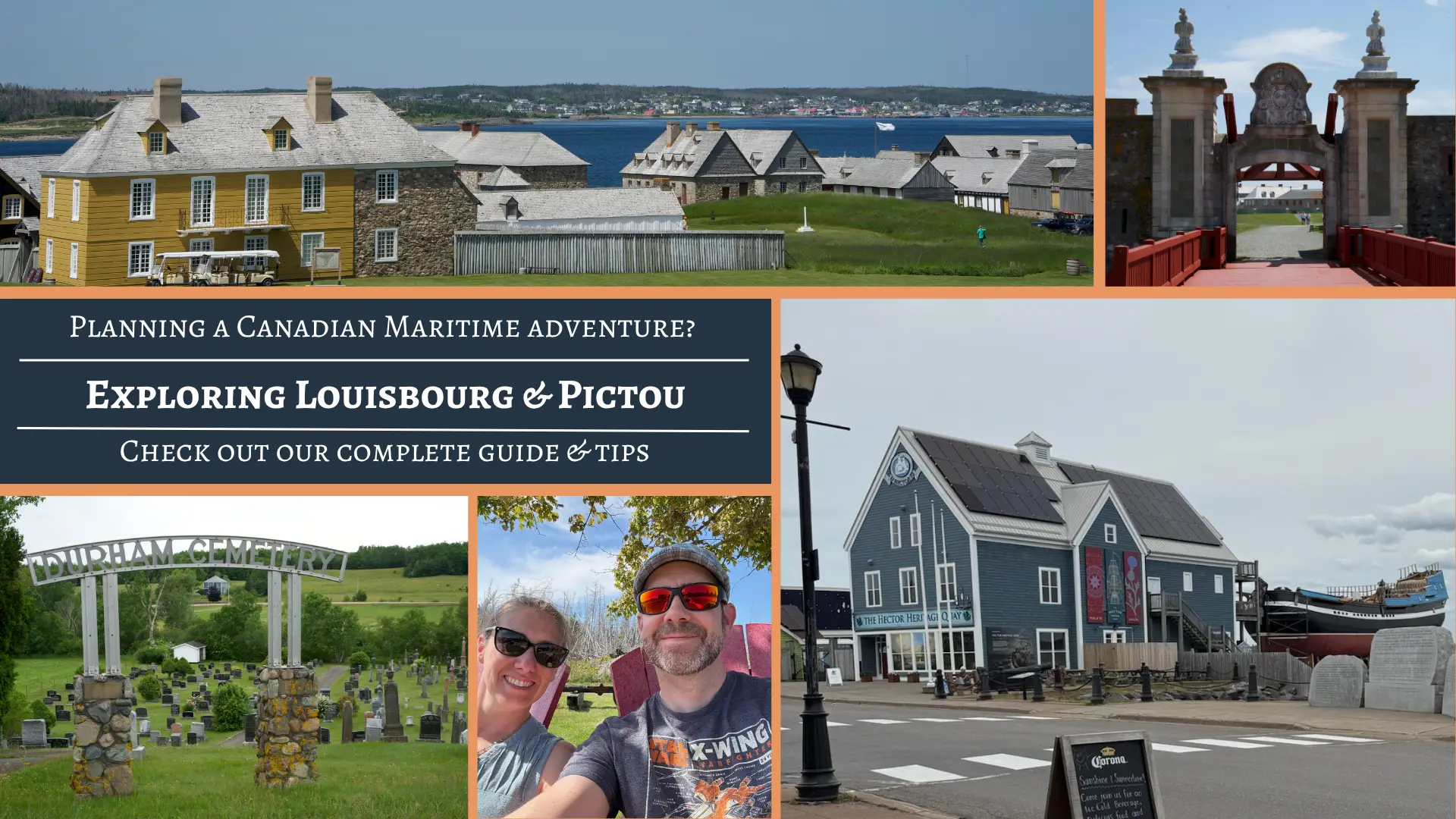
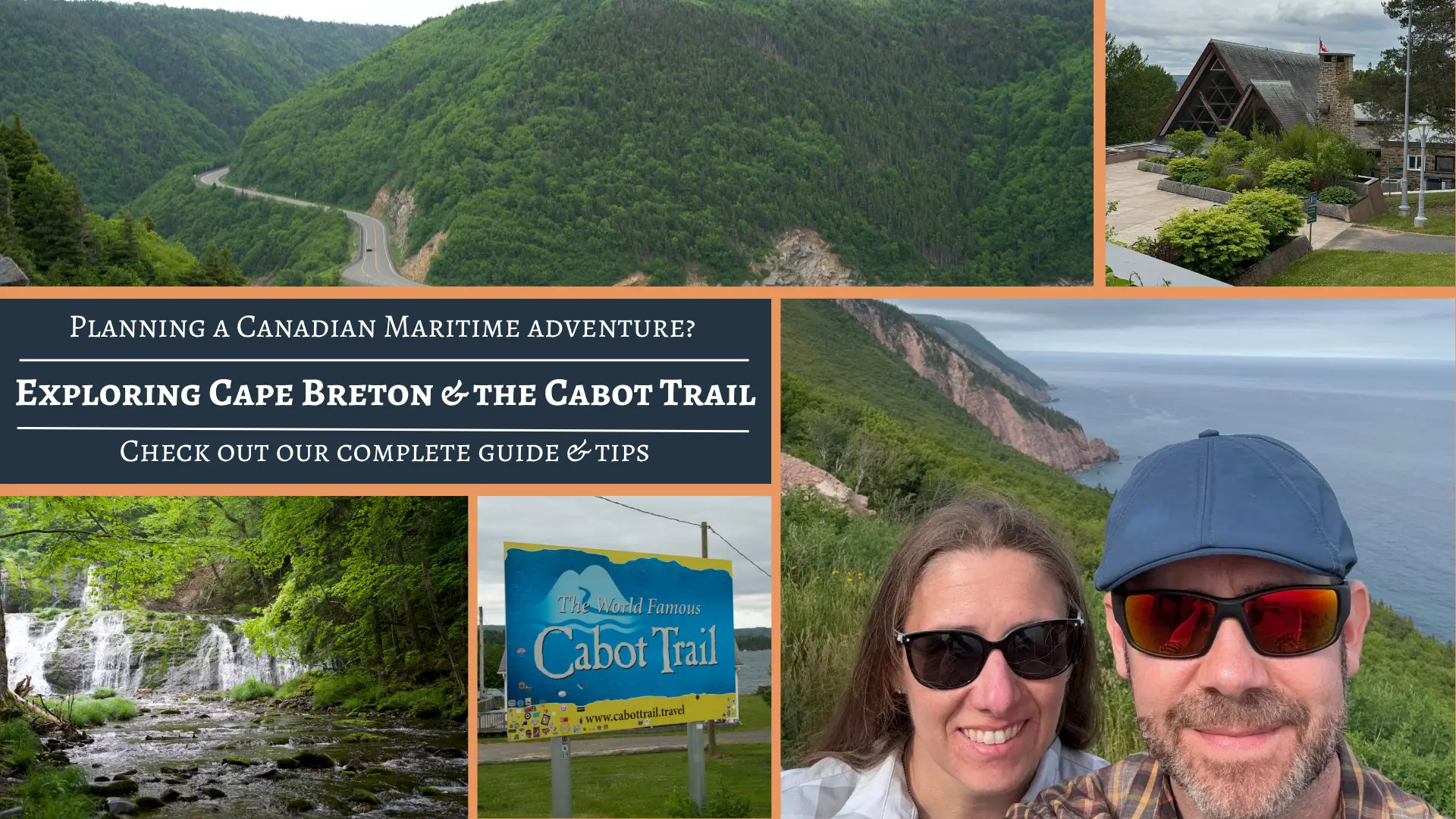
This is Part 6 of our comprehensive Maritime Canada adventure series. Experience our complete journey from the beginning or catch up on any parts you’ve missed.
Up Next: When Nature Becomes the Ultimate Thrill Ride
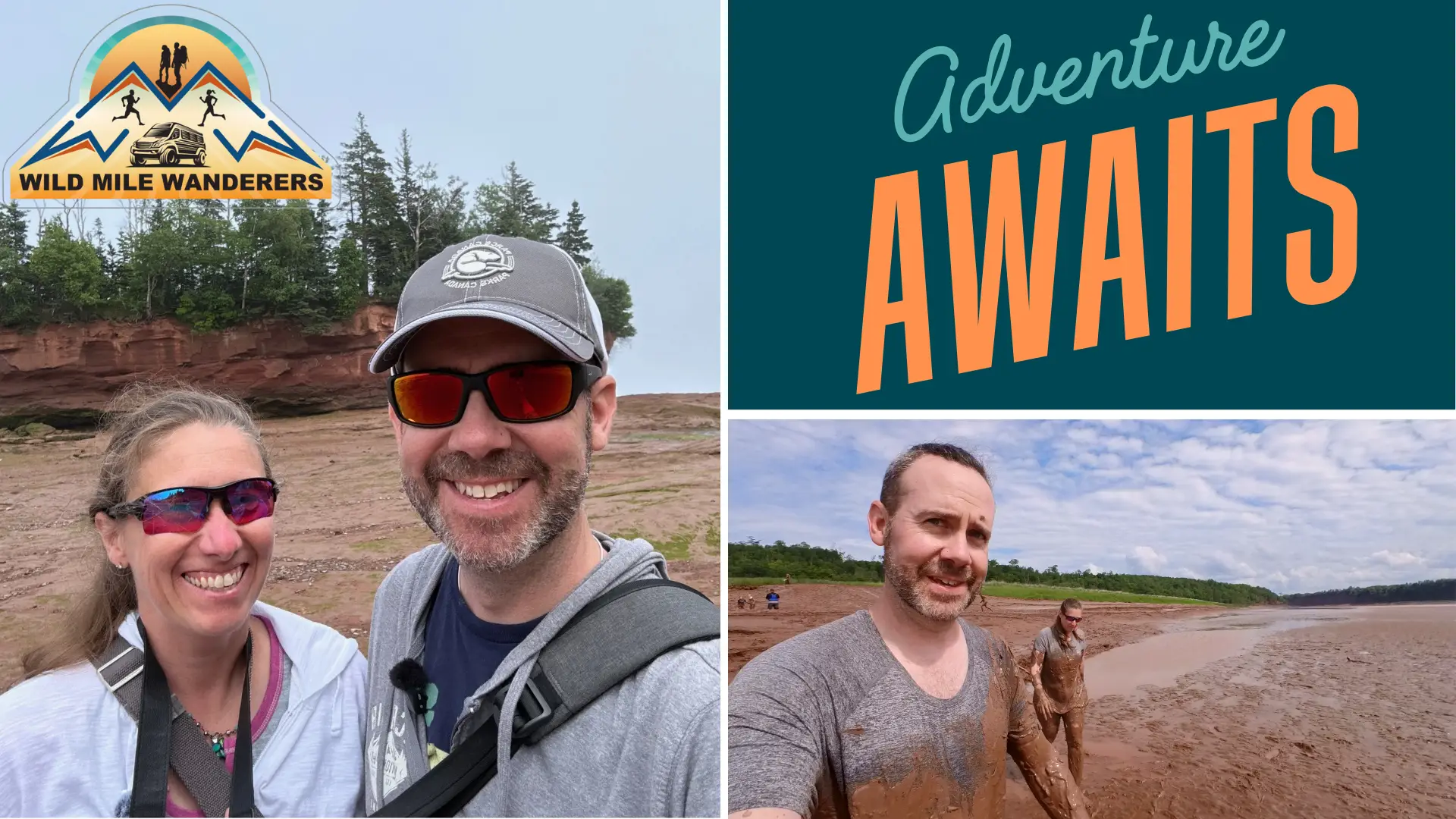
We’re about to experience one of the most unique natural phenomena on Earth—tidal bore rafting on the Bay of Fundy, where the world’s highest tides create rushing walls of water that defy everything you think you know about rivers flowing toward the sea.
Part 7 promises white-knuckle adventure where geology becomes geography in real-time, and we discover why the Bay of Fundy has captured imaginations for millennia.
Disclaimer: Some links in this post are affiliate links, meaning we earn a small commission if you make a purchase at no additional cost to you. We only recommend products and services we’ve personally tested during our travels and outdoor adventures.