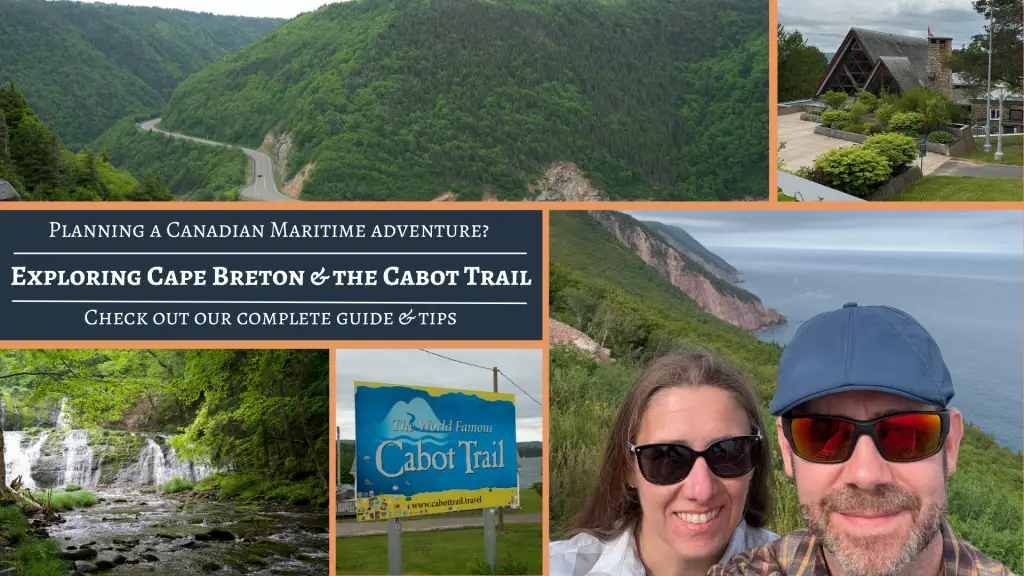
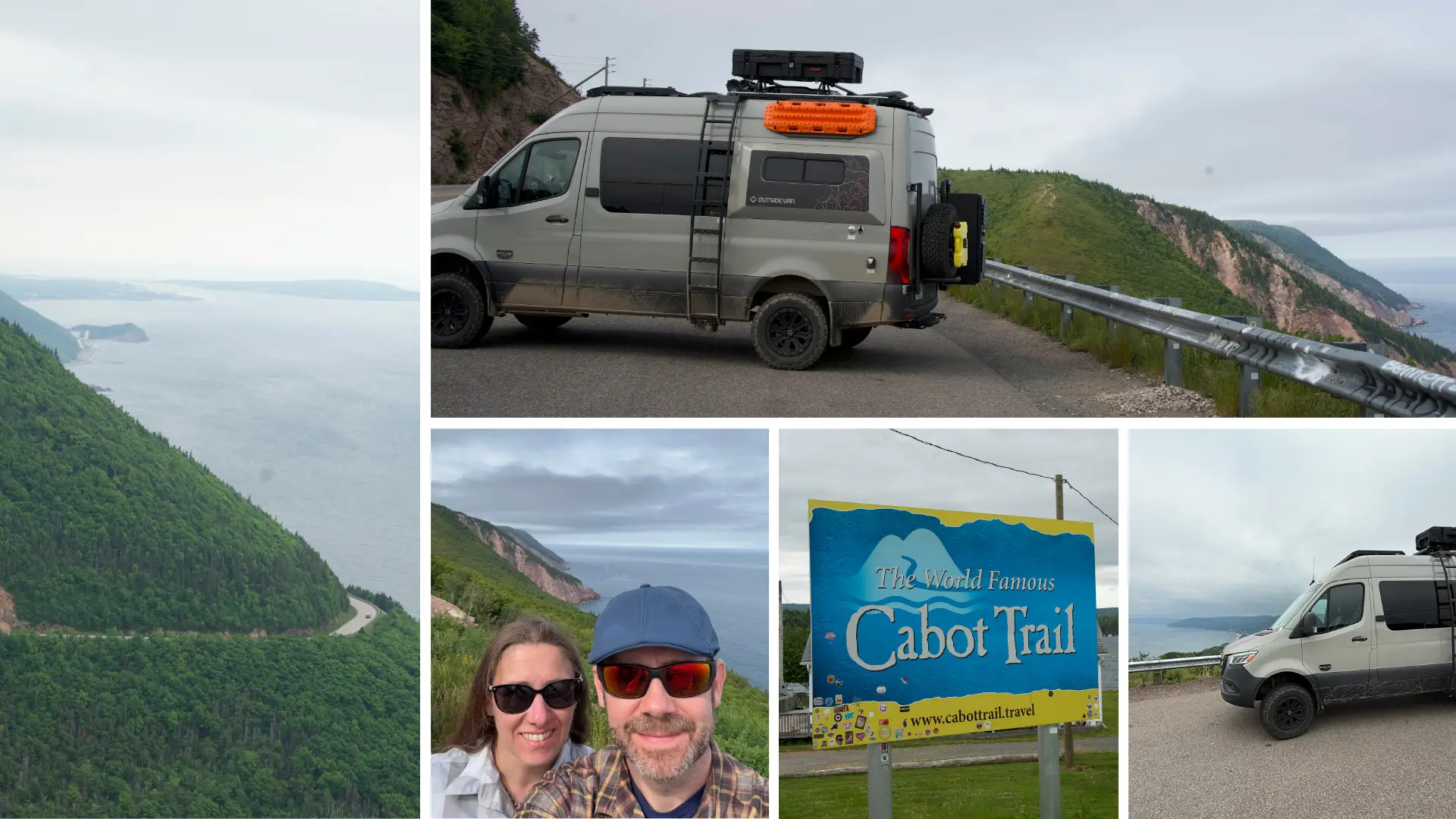
The morning mist clung to the rolling hills as we wound our way deeper into Cape Breton Island. As the Cabot Trail stretched out ahead of us the ancient Highlands seem to rise from the Atlantic Ocean. We got our first breath of salt-tinged air and we knew we were in for a breath-taking journey.
A Highland Welcome at Glenora Inn & Distillery
Our Cape Breton Highland adventure began with a farewell to the Glenora Inn & Distillery, where the previous night had treated us to Canada’s first single malt whisky distillery. With our bags repacked in the van we set course for the legendary Cabot Trail. The short drive to our first stop took us through highland landscapes with inland meadows dotted with Highland cattle.
Hidden Gems: Egypt Falls’ Secret Splendor
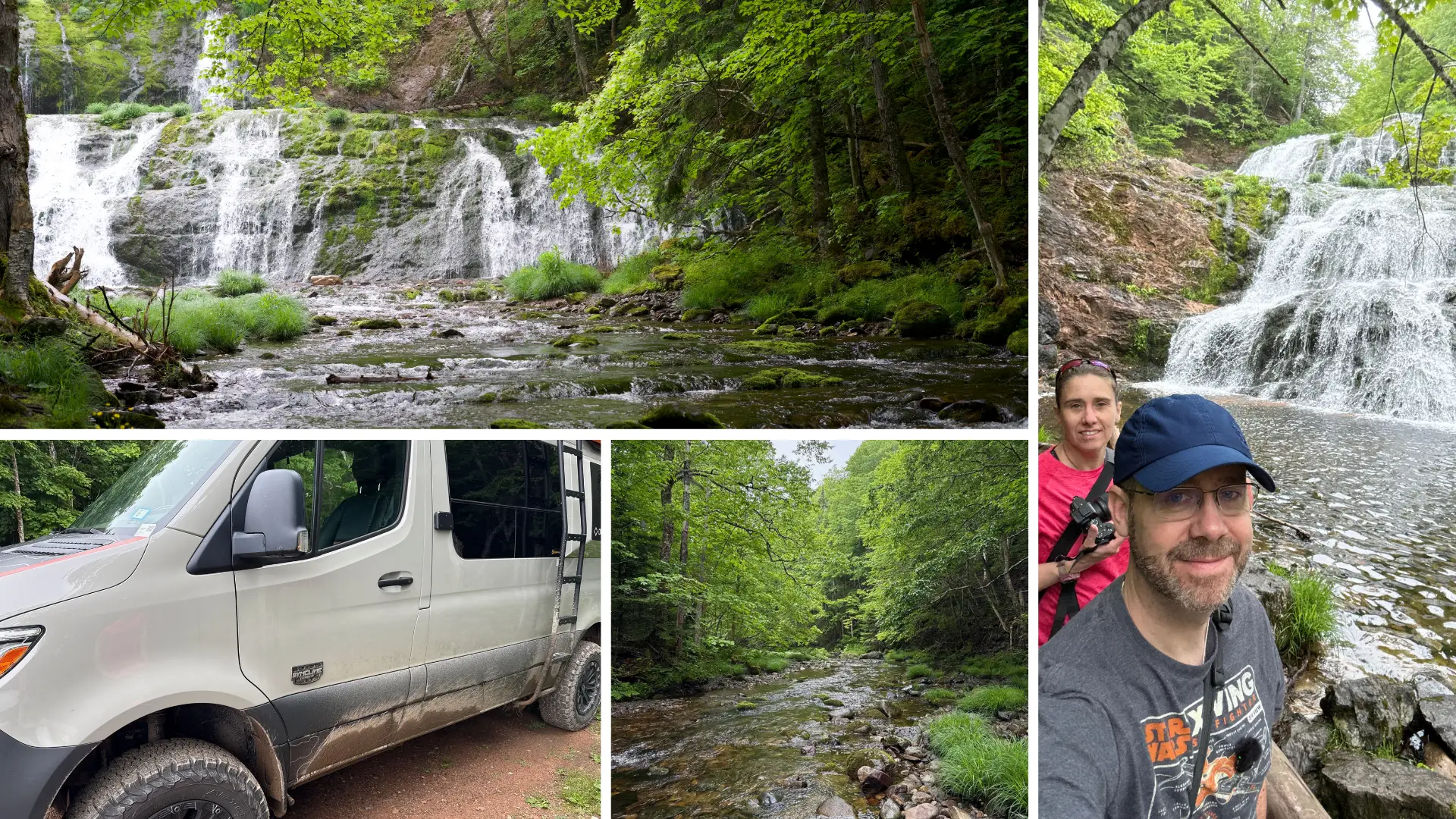
Sometimes the best discoveries come in small packages, and Egypt Falls proved this beautifully. Less than half a mile from the trailhead, this hidden gem started as an innocent woodland stroll, but quickly became a heart-pumping descent to one of Cape Breton’s most rewarding waterfalls.
The trail’s deceptive nature reminded us why proper footwear matters in the Maritimes. After recent rains, the trail felt wonderfully wild—almost like Ireland or Scotland with its lush green canopy and misty atmosphere. We encountered a fork in the trail where both paths offered rope assistance, but given the muddy conditions from the previous night’s rain, we wisely chose the stair route over the more adventurous dirt-and-roots path. ‘Unless we want a mudslide,’ Sully joked as we made our careful descent.
Standing there, catching our breath and listening to the water cascading over the rocks, we were reminded beauty often lies just beyond the obvious path, waiting for those willing to earn their views. The climb back up proved the real challenge—a heart-pumping 35-36% grade that felt like a natural StairMaster workout. At roughly 1,000 feet of elevation gain per mile, this ‘short’ hike definitely earns its reputation as a leg-burner.
Baddeck: Where Hospitality Meets History
Rolling into Baddeck felt like discovering a postcard that had somehow come to life. This charming village, nestled on the shores of Bras d’Or Lake, immediately captured our hearts with its perfect blend of natural beauty and genuine Maritime hospitality.
Our first stop at the Baddeck Tourist Information center proved to be another example of the incredible hospitality we’ve encountered in Nova Scotia. The staff didn’t just hand us maps—they shared their community with infectious enthusiasm, highlighting local artisan shops and hidden gems along the Cabot Trail that you may not discover otherwise. We even learned that the tour guide and musician from the Glenora Distillery also frequently plays at one of the small pubs in Baddeck.
Fuel for the Soul at Highwheeler Cafe & Bakery
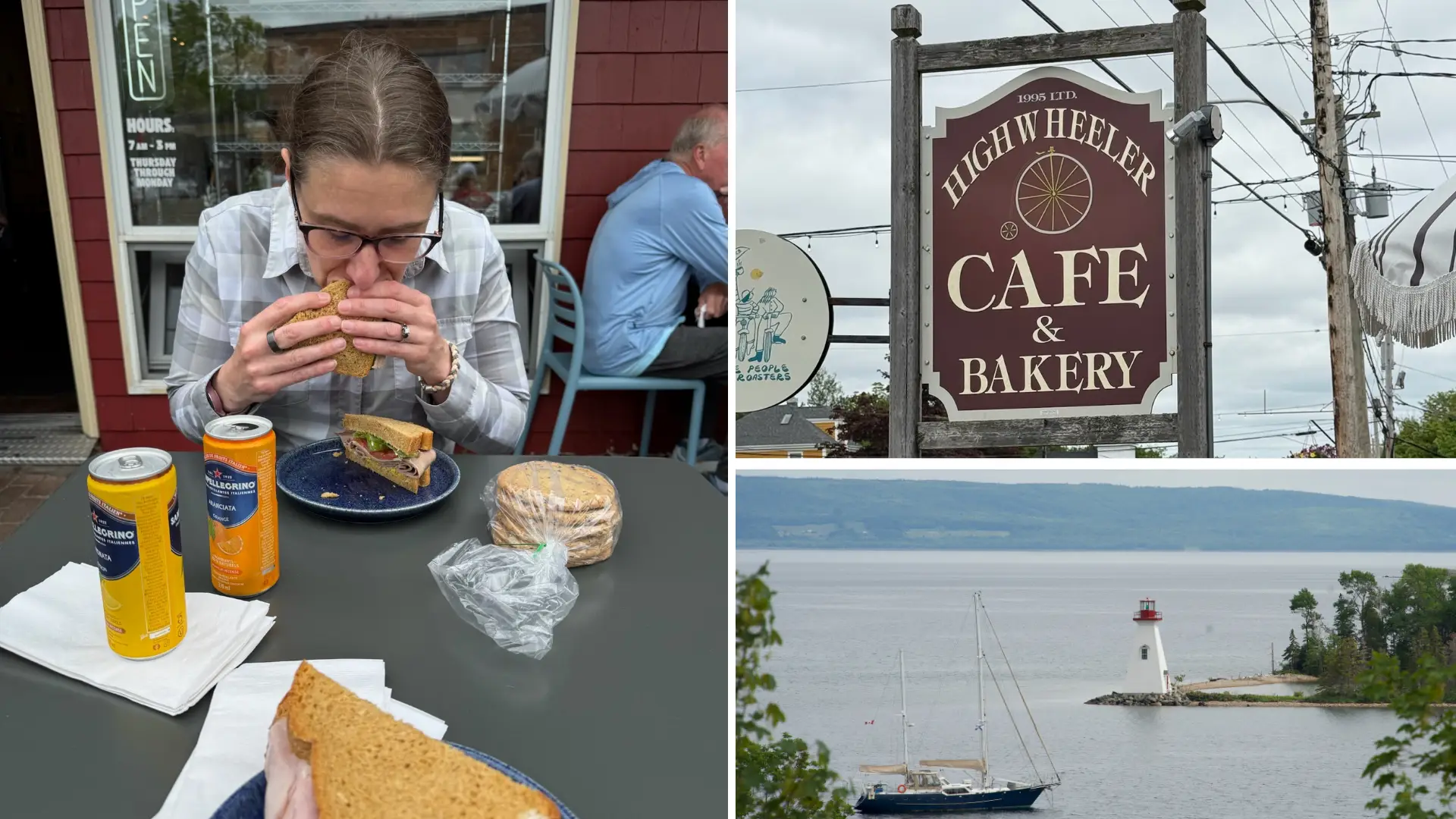
Just a two-minute walk from the visitor center, Highwheeler Cafe & Bakery beckoned with the irresistible aroma of fresh-baked bread. This family-owned gem, boasting a well-earned 4.8-star Google rating, reminded us why the best travel experiences often happen in the smallest places.
The owners treated us like old friends, crafting sandwiches on their signature homemade bread that elevated a simple lunch into a memorable meal. But it was their chocolate chip cookies became our biggest regret. We bought just one package, thinking it would be plenty.
Travel tip: Highwheeler is closed Tuesday and Wednesday, so plan accordingly. And trust us—buy extra cookies.
Bell’s Brilliance: Innovation on Bras d’Or’s Shores
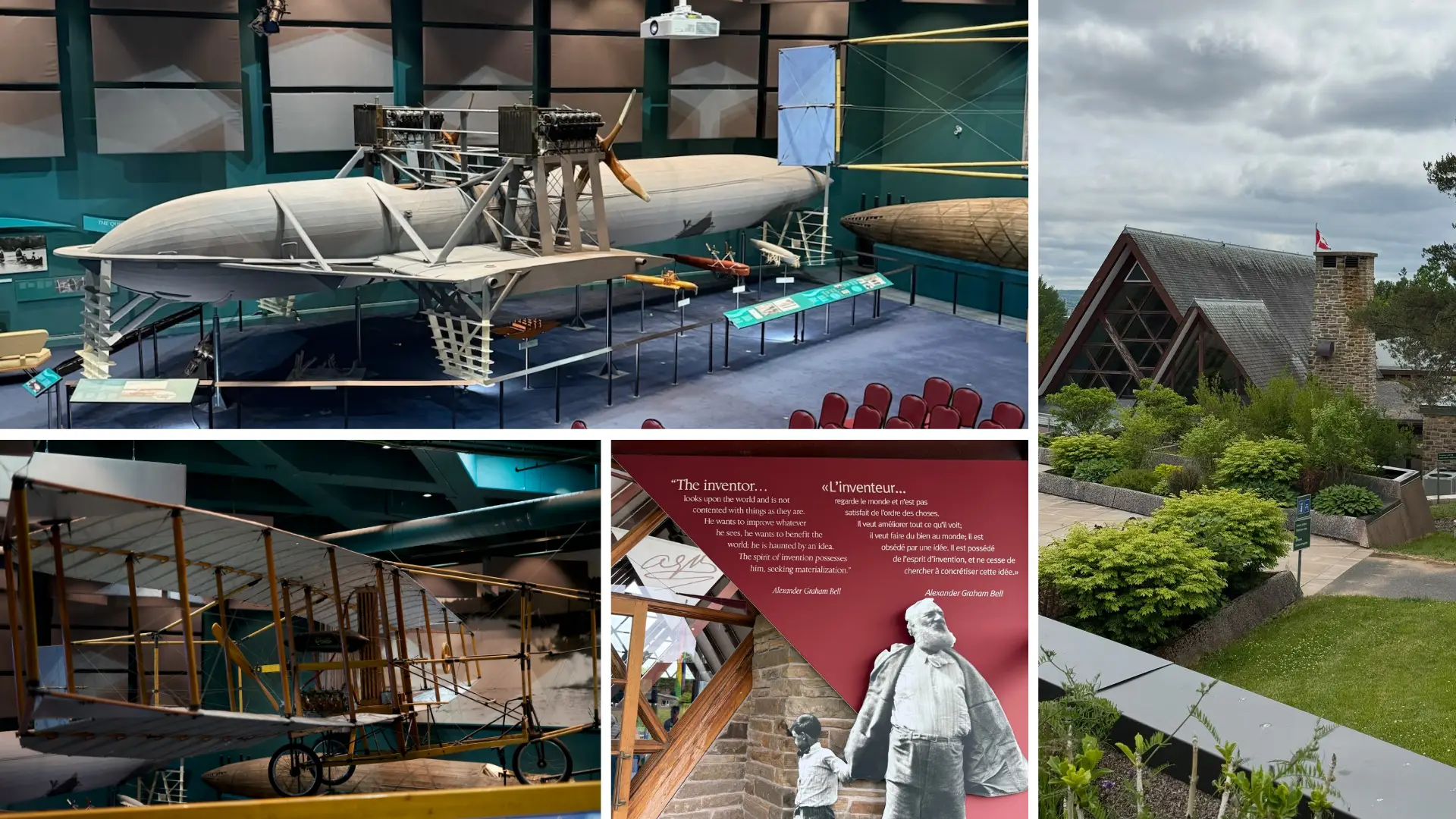
The Alexander Graham Bell National Historic Site might be compact, but it packs an intellectual punch that left us reevaluating everything we thought we knew about the famous inventor. Yes, Bell invented the telephone, but this museum revealed a renaissance mind that encompassed so much more.
Walking through exhibits showcasing his original tools and prototypes, we discovered Bell’s work teaching deaf children to speak using his father’s “Visible Speech” symbols—including his mentorship of Helen Keller, who dedicated her autobiography to him. Even more surprising was learning about his aviation pioneering through the Aerial Experiment Association, which culminated in the Silver Bullet becoming the first aircraft to fly in Canada, right here in Baddeck in February 1909.
The museum’s intimate scale allowed for deep engagement with Bell’s multifaceted genius. Standing among his actual inventions and reading his personal correspondence, we felt connected to a mind that saw possibility where others saw limitation.
What struck us most wasn’t just Bell’s inventive genius, but the deeply personal story behind it. His wife, Mabel, had lost her hearing to scarlet fever at age five, and she was actually his student before becoming his life partner. This personal connection to the deaf community drove much of his pioneering work with ‘Visible Speech’ and his dedication to teaching deaf children to communicate.
The museum also revealed Bell’s fascinating connection to early aviation through his partnership with Glenn Curtiss—a name many don’t recognize but who was innovating aircraft design right alongside the Wright Brothers. We’d actually visited Curtiss’s workshop in Hammondsport, New York, making this Cape Breton discovery feel like completing a historical puzzle.
Travel tip: If you’re visiting between June 20th and September 2nd, admission to all Canadian national parks is free—even for international visitors! This left us with extra budget for those irresistible Highwheeler cookies.
Broad Cove Campground exceeded our expectations in every way. Beyond the prime location within Cape Breton Highlands National Park, we discovered amenities that rivaled upscale accommodations: spotless tiled bathrooms with air conditioning, free hot showers, and surprise laundry facilities that saved our trip (nothing beats fresh clothes after hiking adventures). The campground proved that Parks Canada sets the gold standard for outdoor hospitality.
Day Two: The Cabot Trail Reveals Its Majesty
As the next day dawned with the promise of something extraordinary. The Cabot Trail—all 186 miles of globally acclaimed scenic driving—stretched before us like a love letter written in asphalt and ocean views. Considered one of the world’s most beautiful drives, this legendary route would take us around the northern tip of Cape Breton Island, through landscapes that shift from sea-level coastal roads to clifftop highways with heart-stopping views.
The trail’s personality revealed itself gradually. One moment we were winding through intimate coastal villages where fishing boats bobbed in protected harbors, the next we were climbing toward highland vistas that seemed to stretch into forever. Multiple viewpoints beckoned us to pull over, each offering a different perspective on the Gulf of St. Lawrence’s endless blue expanse.
Local artisan shops dotted our route, each one representing the island’s rich cultural tapestry—from Celtic heritage to Acadian traditions to Mi’kmaq craftsmanship.
Skyline Trail: Where Earth Meets Sky
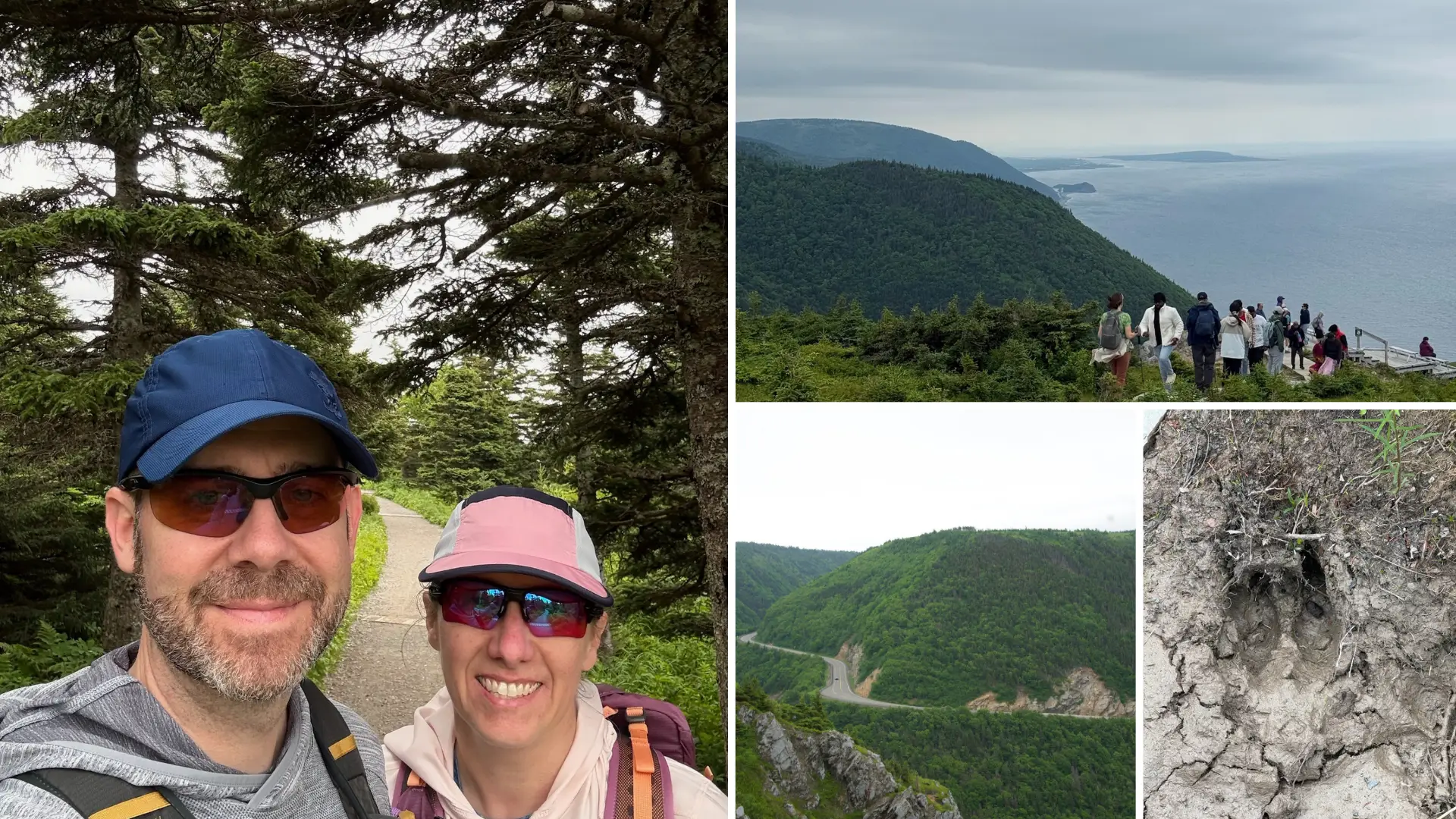
The Skyline Trail represented the crescendo of our Cabot Trail experience—and possibly our entire Cape Breton adventure. This renowned hike, one of the most popular along the trail, started deceptively easy as we entered a hemlock forest that seemed to whisper ancient secrets.
The 6.5 to 8-kilometer trail led us through a mystical woodland where glimpses of the Gulf of St. Lawrence teased us through the trees. But nothing prepared us for the moment we emerged from the forest onto the boardwalk. Suddenly, the entire Gulf opened before us—an infinite expanse of blue meeting sky at a horizon that seemed to curve with the earth itself.
The Cabot Trail snaked below us like a thin ribbon, carrying tiny cars along impossible cliffsides. Standing on that boardwalk required some serious wind-bracing—we’re talking hat-flying, barely-able-to-stand-up winds that reminded us why Mother Nature runs the show in the Maritimes. The 600-foot drop below us felt even more dramatic with gusts trying to push us around, but the raw power of this landscape made the challenge worthwhile. While the only wildlife we saw while we were on the trail were the birds but we found evidence on the large creatures like the moose print we found on the trail.
The trails popularity meant arriving early was wise—while the parking lot is large it still fills up during peak season. Even sharing the experience with so many fellow hikers couldn’t diminish the trail’s magic. Here was Cape Breton at its most sublime—raw, beautiful, and utterly unforgettable.
We’d planned to continue to Meat Cove, but sometimes travel means adapting to reality. With overcast skies limiting views and another three hours of driving ahead, we made the practical choice to save that adventure for another trip. As we learned in the van life: it’s better to fully enjoy what you can see than to rush through experiences hoping for perfect conditions.
Van Life on the Cabot Trail
Our trusty van handled Cape Breton’s varied terrain beautifully—from dirt roads leading to trailheads to the dramatic elevation changes of the Cabot Trail itself. Testing the van’s capabilities on uphill dirt sections reminded us why we chose van life: the freedom to chase waterfalls, change plans when weather doesn’t cooperate, and enjoy Korean beef dinners with waterfall soundtracks as our evening entertainment.
Capturing the Experience: Our Cape Breton Video Journey
Sometimes the best travel stories include the plans that didn’t work out. Missing Meat Cove due to weather reminded us that Cape Breton will always have more to offer than any single visit can capture—which sounds like the perfect excuse for a return trip.
Words can only capture so much of Cape Breton’s magic. The way morning light painted the highlands, the sound of Egypt Falls tumbling over ancient rocks, the taste of those legendary chocolate chip cookies, driving along the cliffs edge, and the feeling of standing on Skyline Trail’s boardwalk with infinity spread before you—these experiences deserve to be seen and felt.
Have you experienced Cape Breton’s magic? Share your own Cabot Trail memories in the comments below, and don’t forget to subscribe for more Maritime adventures from Wild Mile Wanderers.
Watch our full Cape Breton adventure come to life in our YouTube video, where you’ll experience the stunning vistas, hear the sounds of this incredible landscape, and see exactly why Cape Breton captured our hearts so completely.
Subscribe to our YouTube Channel
What’s Next: Fortress Walls and Family Roots
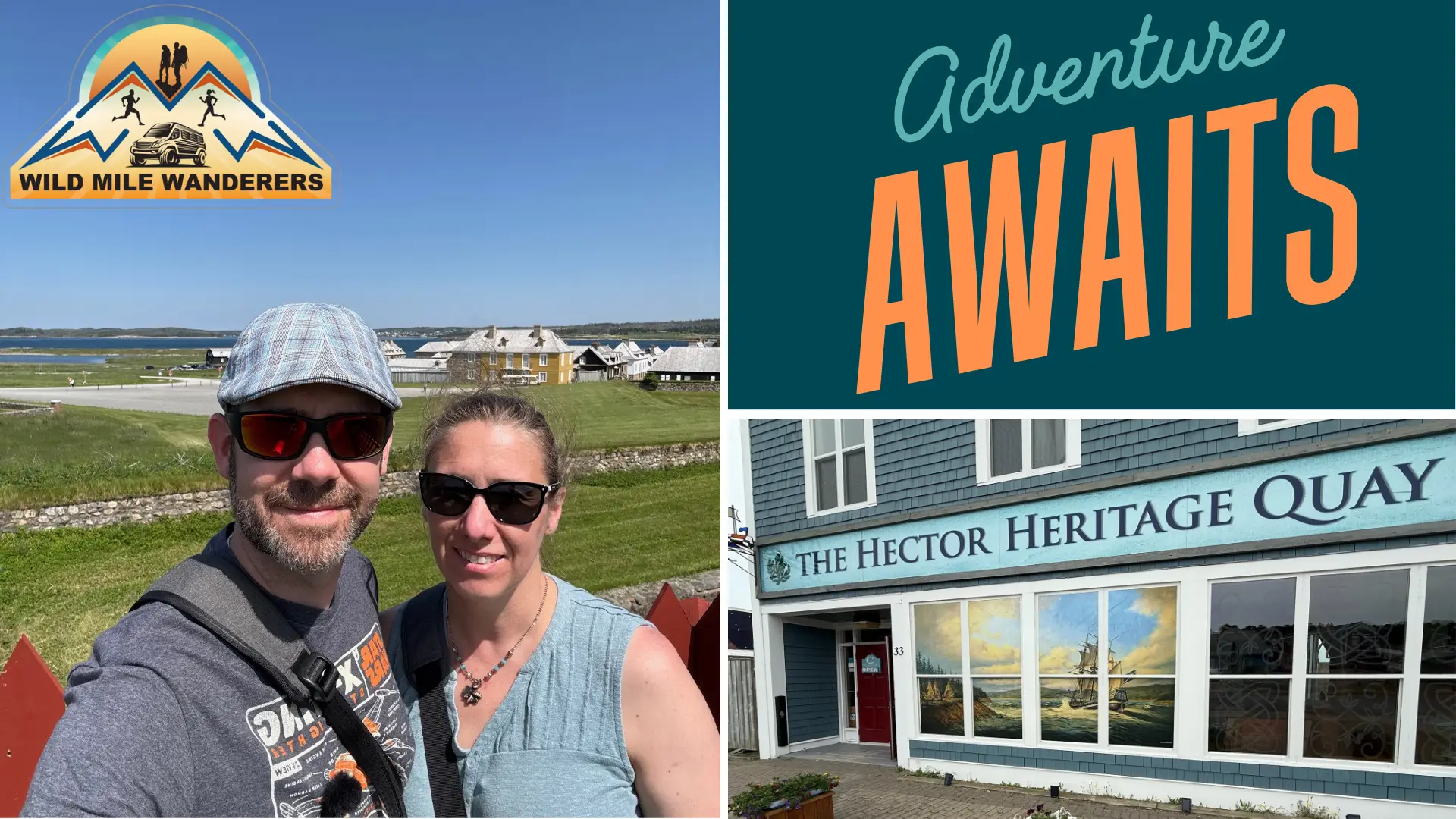
As we reluctantly packed up our campsite at Broad Cove Campground, our Cape Breton adventure was far from over. Ahead lay the Fortress of Louisbourg National Historic Site, where 18th-century French colonial life has been meticulously recreated in what promises to be one of North America’s most impressive historical experiences.
But perhaps even more meaningful awaits us in Pictou, Nova Scotia, where personal history intersects with our travel story. Our upcoming genealogical research promises to connect family roots with the land we’ve been exploring—transforming this journey from simple tourism into something deeply personal.
This is Part 2 of our Maritime Canada adventure series. Catch up on our complete journey:
Stay tuned for Part 3, where fortress walls echo with centuries-old stories and family trees reveal our Nova Scotia heritage.
Disclaimer: Some links in this post are affiliate links, meaning we earn a small commission if you make a purchase at no additional cost to you. We only recommend products and services we’ve personally tested during our travels and outdoor adventures.